Send My Bag Travel Trends Survey
Thursday, 8 Oct 2026

AI Is Planning More Trips, But It Is Also Getting Things Wrong
AI has quickly become another tool travellers can turn to when researching and planning a trip. But our survey found that relying on it doesn't always go according to plan.
More than one-third of respondents, 35.3%, said they have received incorrect information from AI when planning or managing a trip. The most commonly reported problems included incorrect directions or location information (18.1%), incorrect hours for restaurants, museums or attractions (14.3%), and incorrect departure or arrival times (10.4%). Travellers also reported receiving incorrect hotel, airport and baggage information.
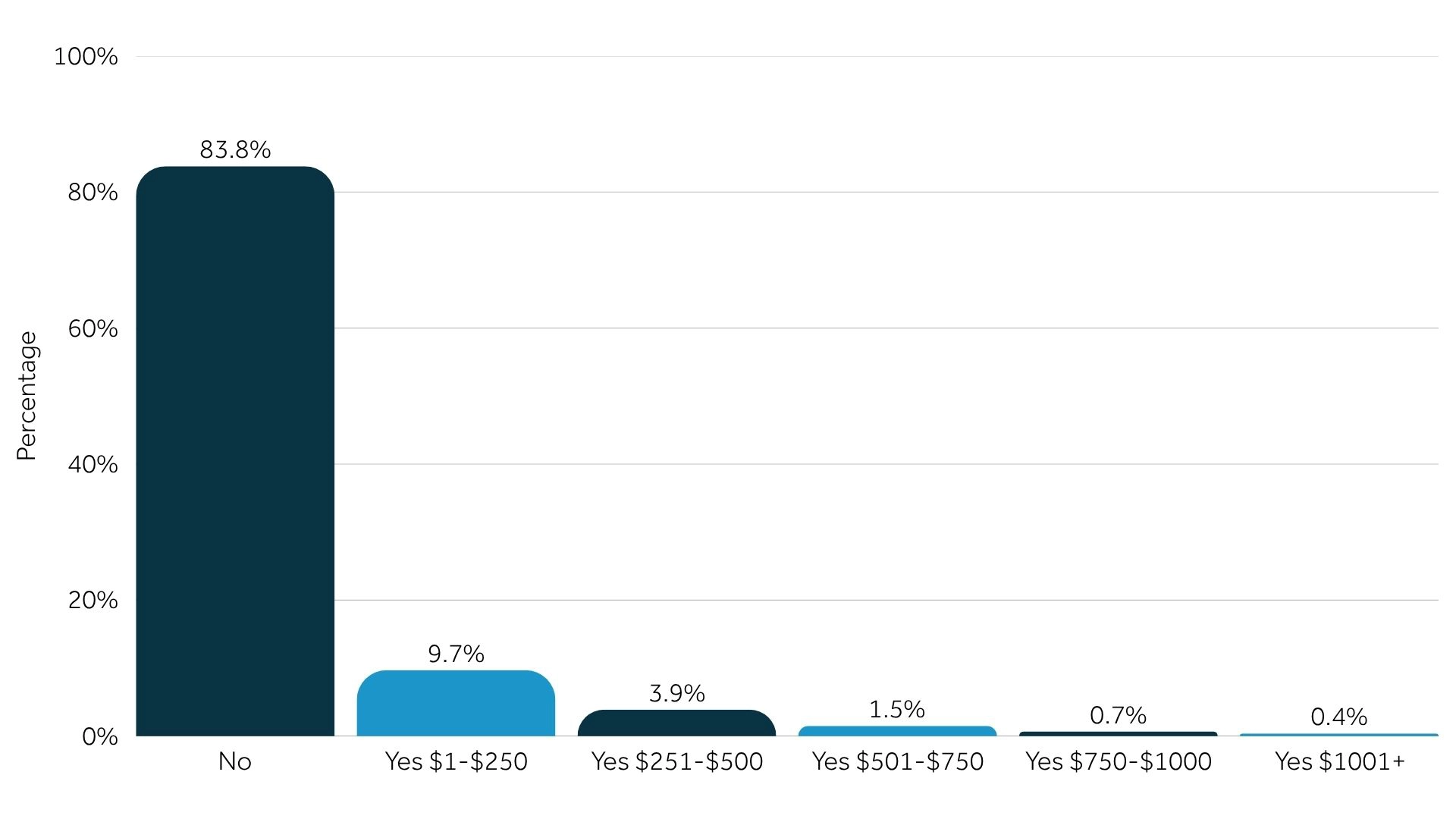
And those mistakes can have a real cost. More than 1 in 6 respondents (16.2%) said they have lost money because they trusted AI while planning or managing a trip. While most reported losing $250 or less, some travellers said AI-related mistakes have cost them more than $1,000.
Americans aren't necessarily ready to hand over the entire vacation, either. Only 10.7% have allowed AI to plan their entire trip without reviewing the itinerary and would do it again. Another 4.8% have tried it but wouldn't repeat the experience. Meanwhile, 43% haven't done so and aren't willing to.
The takeaway for travelers? AI can be a useful starting point, but important information such as flight details, baggage policies, operating hours and entry requirements should still be verified through current, official sources.
The Battle for Overhead Bin Space Is Changing How Americans Pack
Airline baggage policies and limited overhead space are also influencing how Americans travel.
More than one-third of respondents (34.5%) said they've been told to gate check a carry-on, only to board the aircraft and discover there was still plenty of open overhead bin space.
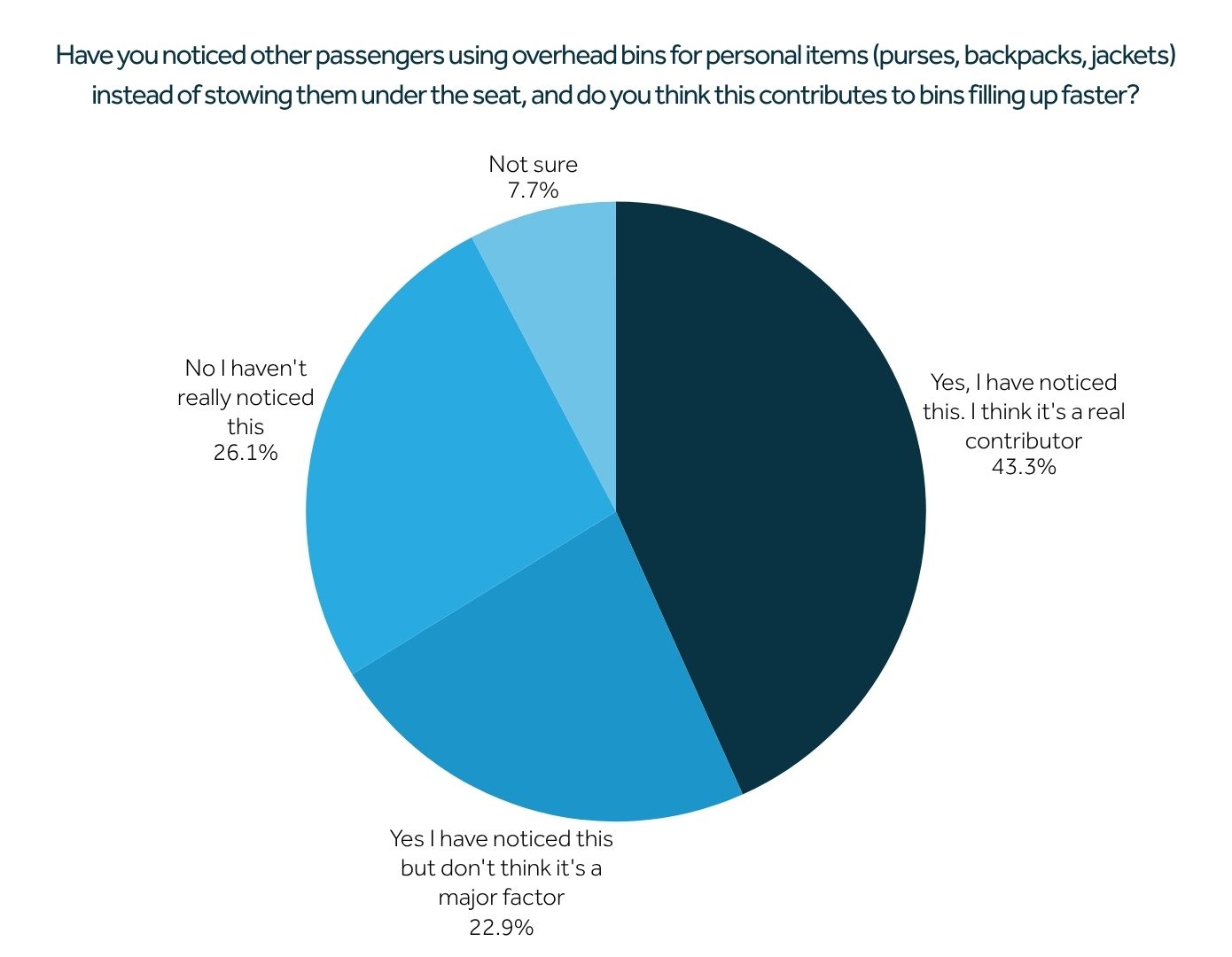
Travellers have noticed another potential contributor to the problem. Nearly two-thirds (66.2%) said they've seen passengers place personal items such as purses, backpacks or jackets in overhead bins instead of under the seat, with 43.3% saying they believe the behaviour is a real contributor to bins filling up faster.
Some travellers are even using gate checking to their advantage. More than 1 in 5 Americans (22.2%) admit they've deliberately brought a carry-on to the gate hoping it would be checked for free so they could avoid paying a checked-bag fee. Another 12.4% have considered trying it.
Limited overhead space is changing packing habits, too. More than a quarter of respondents (27.8%) say they now pack lighter, while 27.5% choose a smaller carry-on and 12.8% try to board earlier to secure overhead space.
The Airport Is Becoming Part of the Vacation
For years, travellers have been told to arrive at the airport early to leave enough time for security. Today, many are getting there early because they actually want to be there.
Nearly 6 in 10 Americans (57.8%) said they have arrived at an airport earlier than necessary specifically to eat, shop, visit a lounge or otherwise enjoy the airport.
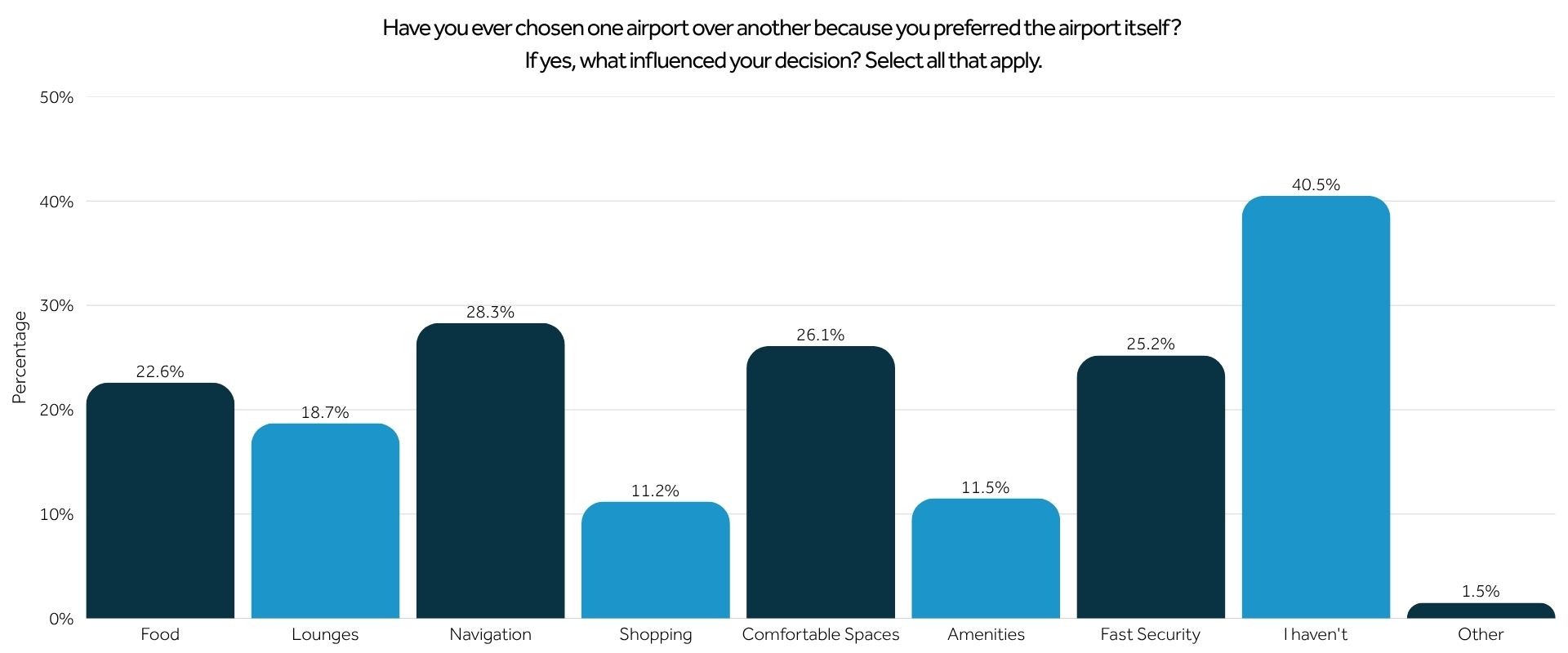
The airport experience can even influence where people choose to fly. A majority of respondents, 59.5%, have chosen one airport over another based at least partly on the airport experience.
What matters most? Respondents pointed to easier navigation (28.3%), more comfortable spaces (26.1%), shorter security or wait times (25.2%), better restaurants and food options (22.6%) and better lounges (18.7%).
The findings suggest travelers aren't only thinking about the destination or the flight anymore. Increasingly, the experience surrounding the flight matters, too.
Travellers Want a Vacation From Their Vacation
Getting home can be just as important as getting away.
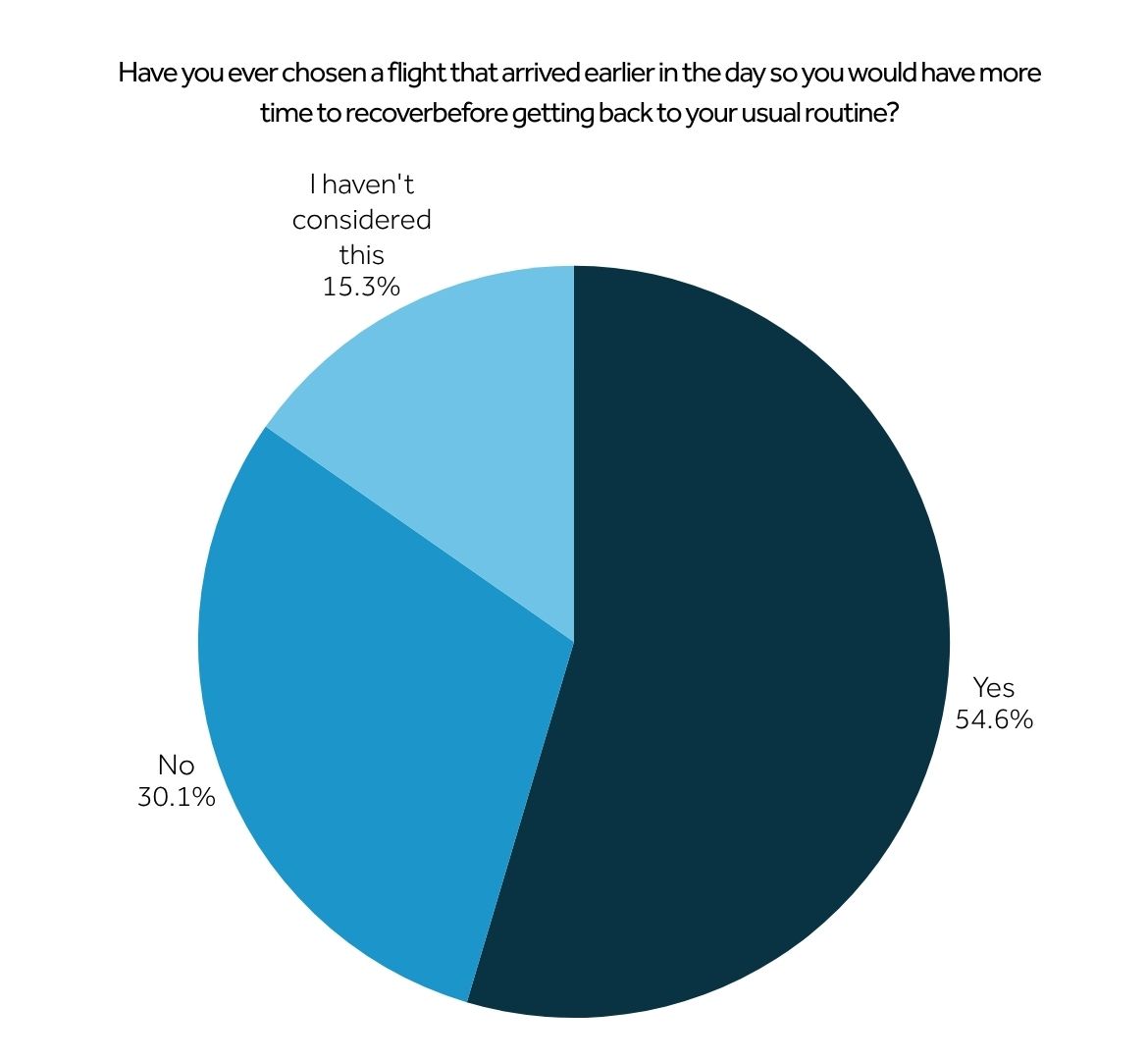
More than half of Americans (54.6%) have chosen a flight that arrives earlier in the day specifically to give themselves more time to recover before returning to their normal routine.
Similarly, 54.5% have paid or would be willing to pay more for a flight, hotel or other travel option if doing so would make returning home less stressful.
But when forced to choose between squeezing in more vacation and having time to recover, Americans are almost perfectly divided: 51.3% would choose an extra vacation day, while 48.7% would rather have an additional day at home before returning to work.
What the Data Tells Us About Travel in 2026
Taken together, the findings point to travellers becoming increasingly focused on the experience surrounding a trip, not simply the destination itself.
They're experimenting with AI but encountering its limitations. They're changing how they pack in response to baggage fees and overhead space. They're considering airport comfort and amenities when making travel decisions. And they're thinking about how they'll feel when the vacation is over before they've even left.
For travelers, that makes planning the logistics of a trip increasingly important. Whether that means verifying an AI-generated itinerary, reconsidering how much luggage to take, allowing more time at the airport or making the journey home easier, a little extra planning can help reduce stress throughout the entire travel experience.
About the Survey: Send My Bag surveyed 1,000 U.S. respondents in September 2026 about travel behaviours and trends, including AI travel planning, airline baggage and gate-checking experiences, airport preferences and post-vacation recovery. Link to full survey here.
Our Most Popular Articles

The Flying Suitcase Journey So Far: Chasing a Guinness World Records Title Across Europe
Follow the Flying Suitcase across Europe as it battles unpredictable weather in pursuit of a GUINNESS WORLD RECORDS™ title.
The Busiest Australian Airports in July and How Travellers Can Beat the Rush
Discover Australia's busiest July airports and practical tips for avoiding queues, managing luggage and travelling with less stress.
How to Prepare for Your First Long Haul Flight
Practical tips for your first long haul flight, covering luggage, comfort, connections, packing and preparing for your arrival.