Flights are rising, but are airline passengers carrying more baggage than ever?
Thursday, 29 Jan 2026
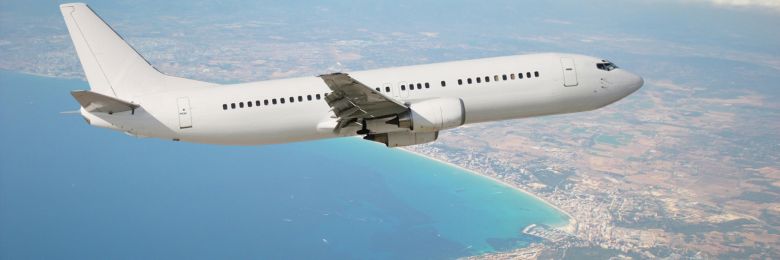
The global aviation industry has entered a new era of growth. Commercial flights are increasing, passenger demand is climbing year on year, and the number of people choosing commercial air travel is now higher than at any point in recent years.
According to the International Air Transport Association, the number of airline passengers worldwide is expected to reach around 5.2 billion in 2026, marking a significant increase compared to last year and continuing a decade-long upward trend in commercial aviation.
This is good news for the airline industry, major airlines and airports alike. However, for air travellers themselves, the experience of flying has become more complicated. While the number of flights, passenger volume and airline capacity continue to grow, many people are finding that bringing luggage with them has become more expensive, more restrictive and more stressful than ever before.
The latest data suggests that we are flying more, but also questioning how we travel with our belongings.
Air travel demand continues to climb
Across the global aviation industry, the latest data shows strong and sustained growth. Passenger boardings are increasing across both domestic and international routes, with leisure travel leading the recovery. Load factor across commercial airlines remains high, showing that aircraft are consistently operating close to capacity.
In the United States, the Federal Aviation Administration continues to report growing passenger volume and increasing aircraft movements across major hubs such as New York. The number of commercial flights handled each day has risen steadily over the past decade, driven by a combination of factors including lower ticket prices, strong travel demand during summer months, and expanded airline capacity from the largest airlines.
The International Air Transport Association describes this growth as part of the long-term future of air travel, with Director General Willie Walsh noting that commercial air travel is expected to continue growing across the next decade as more people gain access to affordable routes, expanded country pairs and improved mobile apps for booking and managing flights.
At a given moment, there are now a lot of people in the air worldwide, with air traffic controllers managing growing complexity across commercial aviation networks. This makes clear that flying is no longer a luxury activity for a small group. It is now embedded into everyday life for students, professionals, families, expats and long-term travellers.
Airline baggage policies have moved in the opposite direction
While passenger demand and the number of flights continue to grow, baggage allowances have not followed the same movement.
Across major airlines and commercial airlines, baggage policies have become stricter, more fragmented and more difficult to navigate. Cabin allowances vary between different airlines, baggage sizers are used more frequently by gate agents, and excess fees can be applied at the gate with little flexibility. For travellers making a long flight or a round-trip flight with connections, this can create significant uncertainty.
We've already covered how travellers are increasingly being forced to get creative to avoid airline fees, including wearing multiple layers, transferring items between bags at the gate and even using neck pillows as extra hand luggage!
American Airlines recently dropped bag sizers at some airports following public criticism, highlighting just how sensitive the issue of baggage enforcement has become. Similarly, when Ryanair introduced changes allowing bigger bags under certain fare types, confusion around baggage rules continued to affect service quality for many passengers.
For many air travellers, it no longer feels like baggage is part of the flight. Instead, it feels like a separate and increasingly unpredictable cost layered on top of ticket prices which can look affordable at first glance.
Real Passengers' Thoughts
This shift in passenger experience is very obvious across social platforms and travel communities. While some airlines are responding with jabs at themselves in comments (we see you!), others try to respond empathetically to customers, and others, frustratingly, seem to ignore the pains their customers are experiencing.
On Reddit, travellers regularly share experiences of unexpected baggage charges and the emotional impact that comes with them. In one widely discussed thread on AskUK, users questioned when airline baggage fees became so high, with some describing how a hold bag could cost nearly as much as the flight itself. They queried whether a "hack" of buying two seats would be better as they'd get more luggage and more space at very little extra cost!
Customers are even boycotting airlines and calling for others to do so too, such as this Reddit post where a Flair Airlines passenger described feeling misled after being charged for luggage they believed complied with size limits.
Even when airlines adjust policies, public trust can be fragile. When Southwest Airlines changed its long-standing free checked baggage policy, passengers reacted strongly across social media, with coverage of the backlash reported by the New York Post.
These reactions show that baggage policies influence not only cost, but also loyalty programs, brand perception and willingness to choose certain commercial airlines over others.
New survey suggests baggage fees are changing behaviour
To better understand how baggage charges affect air travellers, we surveyed a national sample of 1,000 frequent flyers aged 18+ about their recent experiences with commercial air travel.
The findings suggest that baggage policies are actively shaping behaviour:
58% said baggage fees make them reluctant to fly with hold luggage
42% said they have chosen different airlines based specifically on baggage costs
28% said they delayed booking a flight because of expected baggage fees
27% said they now try to travel carry-on only even when it is inconvenient
17% said they have used a luggage shipping service to avoid airline baggage fees
Rather than being a minor annoyance, baggage charges are influencing booking decisions, airline choice and how people plan their trips. For many American adults and international travellers alike, the total cost of flying now extends well beyond the advertised ticket price.
Expert insight from Send My Bag
Adam Ewart, CEO at Send My Bag, explains why this trend matters for modern travellers.
“Air travel is more accessible than it has ever been, which is a good thing. But at the same time, the experience around luggage has become more complex and less transparent. People are not just taking short leisure trips anymore. They are relocating for work, studying abroad, travelling with children, or carrying specialist equipment. In those situations, packing lighter is not always realistic. What travellers want is clarity, predictability and control over how their belongings are transported. That is why more people are building alternative solutions into their travel plans rather than relying solely on airline baggage systems.”
This reflects what Send My Bag sees across its customer base. Students shipping their belongings overseas, families sending luggage ahead for long stays, athletes travelling with sports equipment, and professionals relocating internationally are all growing segments.
Our customers are actively searching for ways to travel more efficiently.
Read more:
At the same time, there is growing awareness that sometimes the most practical solution is not to squeeze everything into a carry-on, but to separate luggage from the flight entirely.
The future of commercial air travel includes smarter luggage planning
The latest data suggests that passenger demand will continue to grow across the next decade. Commercial flights, charter flights and international routes are all expected to expand as the global aviation industry evolves. Aviation jobs, sustainable aviation fuels and air travel safety will remain important areas of development, but so too will the passenger experience.
As more people take long flights, relocate across borders, and build travel into everyday life, expectations around fairness, transparency and service quality will continue to rise. Baggage policies that feel opaque or punitive risk pushing customers towards different airlines or towards alternative services altogether.
For today’s air travellers, smart travel planning increasingly includes asking not only “Which airline should I fly with?” but also “What is the best way to move my belongings?”